
When winter arrives, a handshake deal for snow clearing can quickly turn into a costly misunderstanding. A formal snow removal contract is your best defense against unexpected liabilities and operational chaos.
It provides a clear, legally-binding agreement that protects both property managers and service providers, ensuring everyone is on the same page before the first flake falls.
This essential document outlines the complete scope of work, from trigger depths for plowing to specific de-icing protocols.
A well-crafted contract prevents disputes over service levels and ensures your property remains safe and accessible throughout the season.
In this article, we will explore the essential elements of a snow removal contract, highlighting key components that should be included to make it effective. From defining service areas to outlining payment terms and snow event triggers, we’ll provide insights and examples to help you create a comprehensive contract.
Professional Snow Removal Contracts
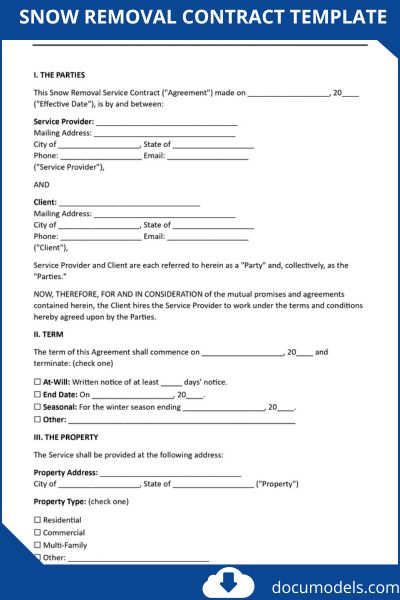
A well-structured snow removal contract is essential to ensure that properties remain safe and accessible throughout the season.
Download snow removal contractSnow removal contract template
Commercial snow removal contract
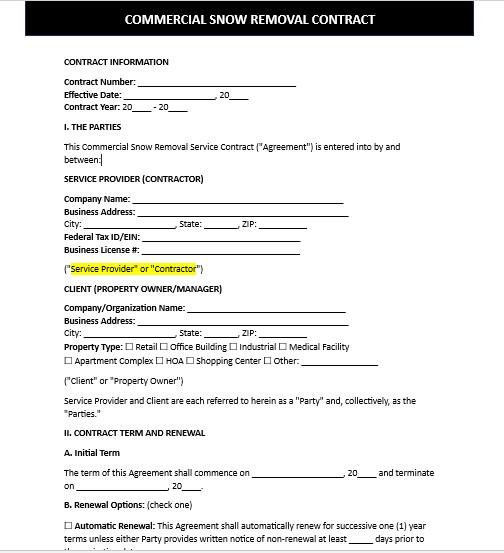
What Is a Snow Removal Contract?
A snow removal contract is a legally binding agreement between a service provider (such as a snow plowing company) and a client (like a homeowner or business). It outlines the terms for removing snow and ice from specified areas, including services like plowing, salting, shoveling, or de-icing.
These contracts ensure clear expectations, payment details, and responsibilities, reducing the risk of disputes during harsh winter conditions.
When To Use a Snow Removal Contract
Snow removal contracts are crucial in scenarios where consistent, professional snow management is needed.
Use one in these common situations:
- Seasonal Preparations: Before winter hits, property owners in snowy areas (e.g., the Midwest or Northeast U.S.) should secure contracts to avoid last-minute scrambling during storms.
- High-Risk Properties: For locations with heavy foot traffic, like retail stores or apartment complexes, where untreated snow could lead to lawsuits.
- Long-Term Arrangements: If you need ongoing services rather than one-off jobs, a contract provides structure for the entire season.
- Budget Control: When you want to lock in rates and avoid surprise fees from variable weather.
- Legal Protection: Anytime there’s potential for disputes over service quality, timing, or payment.
Avoid using informal agreements for large-scale or commercial jobs, as they often lack the detail needed for enforcement. Always consult local laws, as some areas require permits for snow removal operations.
Types of Snow Removal Contracts
Snow removal contracts vary based on scope, duration, and payment structure. Here’s a breakdown of the most common types:
- Per-Event Contracts: Charged per snowfall or storm. Ideal for unpredictable winters where you only pay for actual services.
- Seasonal Contracts: A flat fee for the entire winter season, regardless of snowfall amount. Best for budget predictability in areas with consistent snow.
- Per-Inch Contracts: Fees based on snowfall depth (e.g., $50 for the first 2 inches, plus $10 per additional inch). Suited for regions with variable weather.
- Time-and-Materials Contracts: Billed hourly for labor plus costs for materials like salt. Useful for custom or irregular jobs.
- Push Contracts: Focuses on pushing snow aside rather than full removal, often cheaper for large lots.
| Type | Payment Structure | Best For | Potential Drawbacks |
| Per-Event | Per storm | Low-snow years | Higher costs in heavy winters |
| Seasonal | Flat rate | Predictable budgeting | Overpayment if mild winter |
| Per-Inch | Based on depth | Variable snowfall | Requires accurate measurement |
| Time-and-Materials | Hourly + materials | Custom needs | Can exceed budget if job extends |
| Push | Per push/service | Large areas | May not include full clearing |
Commercial vs. Residential Snow Removal Contracts
Snow removal needs differ significantly between commercial and residential settings, influencing contract details.
Commercial Snow Removal Contracts
These are tailored for businesses, offices, shopping centers, or industrial sites.
Key differences include:
- Scale and Scope: Often cover larger areas like parking lots, sidewalks, and loading docks, requiring heavy equipment.
- Timing Requirements: May mandate 24/7 availability or clearing within hours of snowfall to minimize business disruptions.
- Liability Focus: Higher emphasis on insurance due to public access and potential for lawsuits.
- Pricing: Typically higher, with options for multi-year deals or bundled services like landscaping.
Residential Snow Removal Contracts
Designed for homes, driveways, and small properties.
They emphasize:
- Simplicity: Shorter contracts focusing on basic plowing and salting.
- Flexibility: Often per-event or seasonal, with less stringent timing (e.g., clearing by morning).
- Cost-Effectiveness: Lower fees, but may include add-ons like roof snow removal.
- Personalization: Tailored to homeowner needs, such as pet-safe de-icers.
Elements to Include in a Snow Removal Contract
A strong contract should be detailed to prevent ambiguities. Here’s a comprehensive list of essential elements, explained for clarity:
- Parties Involved: Names, addresses, and contact info for the provider and client. Include business licenses if applicable.
- Scope of Services: Specify what areas will be cleared (e.g., “driveways, sidewalks up to 100 ft”), methods (plowing, salting), and triggers (e.g., “service after 2 inches of snow”).
- Payment Terms: Detail rates, billing schedule (e.g., monthly or per event), accepted methods, and late fees. Include any deposits or retainers.
- Duration and Schedule: Start/end dates, renewal options, and response times (e.g., “within 4 hours of snowfall end”).
- Materials and Equipment: List what’s used (e.g., eco-friendly salt) and who supplies it.
- Insurance and Liability Clauses: Require proof of insurance; include hold-harmless agreements.
- Termination and Cancellation: Conditions for ending the contract, notice periods, and refunds.
- Dispute Resolution: How to handle disagreements, such as mediation.
- Force Majeure: Excuses for non-performance due to extreme weather or events.
- Signatures and Dates: Space for both parties to sign, making it binding.
Liability, Compliance, and Legal Considerations
Navigating liability and legal aspects is critical to protect against risks like injuries or property damage.
Liability
- Insurance Requirements: Providers should carry general liability insurance (at least $1 million) to cover accidents, such as slips or equipment damage.
- Indemnification Clauses: Specify who is responsible for claims—e.g., the provider indemnifies the client for negligence.
- Waivers: Clients may waive certain liabilities, but never for gross negligence.
Compliance
- Local Regulations: Comply with municipal rules on snow disposal (e.g., no dumping in streets) and environmental guidelines for de-icers.
- Permits and Licenses: Ensure the provider is licensed, especially for commercial work.
- ADA Compliance: For commercial properties, ensure pathways are accessible for people with disabilities.
Legal Considerations
- Force Majeure: Clauses for unavoidable events like extreme weather delaying services.
- Governing Law: State which jurisdiction’s laws apply.
- Signatures: Require wet or electronic signatures for validity.
- Consult Professionals: Always have a lawyer review the contract, especially for commercial deals.
Frequently Asked Questions (FAQ)
Most contracts cover snow plowing, salting or de-icing, and clearing walkways or driveways. Some may also include snow hauling or pre-treatment services. Always confirm the specific services with your provider.
It’s advisable to sign a contract before the winter season begins, typically by early fall. This ensures timely service and availability of your chosen provider.
Verify that the contractor is insured, has a good reputation, and offers clear communication channels. Discuss response times, equipment availability, and service guarantees to assess reliability.
Most contracts run from November 1 to April 15, covering the standard snow season. Some providers may offer services outside these dates for an additional fee.
It depends on contract type: Per-event bills per visit; seasonal may have snowfall caps with extra fees if exceeded; full-service covers all for a fixed price. Clear procedures for extreme weather are essential.
Costs average $45-$160 per visit or $300-$1,000 for seasonal contracts. Hourly rates range $25-$75. Factors include location, property size, and snowfall; quotes vary by state and service type.
Yes, traditional rock salt can harm plants, pets, and concrete. Some providers offer eco-friendly de-icing alternatives like Safe Paw, which are safer for the environment and surfaces.
Format model to edit
Related Articles: