
When it comes to organizing live music events, clear agreements between performers and event organizers are essential to ensure a smooth and successful experience.
A Music Performance Contract is a legally binding document that outlines the terms and conditions under which a musician or band will perform.
This contract covers everything from performance schedules and payment details to specific guidelines on conduct and technical requirements.
Having a well-drafted contract protects both parties by setting clear expectations and minimizing potential misunderstandings.
Whether you are a musician seeking to safeguard your rights or an event organizer aiming for a seamless show, understanding the key elements of a Music Performance Contract is crucial.
In this post, we will explore the importance of these contracts and how they help create professional and hassle-free musical performances. Plus, we’ll share customizable Music Performance Contract Templates to help you get started quickly and confidently.
Music Performance Contract Template
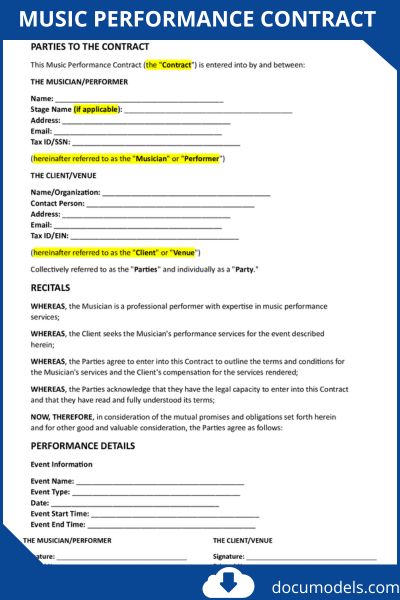
This legal agreement not only outlines the expectations and responsibilities of each party but also protects their rights and ensures a smooth performance.
Music Performance Contract (Template)Music Performance Contract Template
What Is a Music Performance Contract?
A music performance contract is a legal agreement between performers (like bands, DJs, or solo artists) and event organizers (such as venues, promoters, or festivals). It outlines the terms of a live performance, ensuring clear expectations on payment, responsibilities, and rights.
Unlike general service contracts, it addresses music-specific issues, such as sound checks, rider requirements (e.g., backstage amenities), and intellectual property rights for recordings.
Key Benefits for Beginners:
- Clarity: Spells out what each party delivers.
- Protection: Covers cancellations, liability, and payments.
- Professionalism: Builds trust and sets the tone for future gigs.
For example, imagine a band agreeing to play a wedding without one—disagreements over overtime or equipment damage could ruin the day.
When to Use a Music Performance Contract
Use this contract anytime money or commitments are involved in a live music event. It’s not just for big tours; even small club shows benefit.
Common Scenarios
- Venues and Promoters: Hiring local bands for weekly nights.
- Private Events: Weddings, corporate parties, or birthdays.
- Festivals and Tours: Multi-act lineups needing detailed schedules.
- One-Off Gigs: Street fairs, bars, or online-streamed performances.
When It’s Essential:
- Payment exceeds $500 (to avoid verbal misunderstandings).
- Multiple parties are involved (e.g., band members, managers).
- High stakes exist (large crowds, alcohol, outdoor venues).
- International or cross-state travel is required.
| Scenario | Why Use It? | Risk Without It |
| Bar Gig | Defines set length and pay | Unpaid overtime |
| Wedding | Lists rider (e.g., meals) | “Forgotten” green room setup |
| Festival | Covers cancellations | Weather-related losses |
| Corporate Event | Includes non-compete clauses | Performer poached mid-event |
Skip it only for free, casual jams among friends—but even then, a simple email summary helps.
Key Parties and Contract Structure
A music performance contract typically involves two main parties, but it can expand based on the event’s complexity.
Here’s a breakdown:
Key Parties Involved
Performer/Artist: The individual or group providing the music. This could be a solo singer, band, orchestra, or DJ.
Hirer/Organizer: The person or entity booking the performance, such as a venue manager, event planner, promoter, or client (e.g., for a wedding).
Additional Parties (Optional):
- Agent/Manager: Represents the artist in negotiations.
- Promoter: Handles marketing and ticket sales.
- Sponsor: Provides funding in exchange for branding.
Basic Contract Structure
Contracts can range from a one-page template to a detailed multi-page document. A standard structure includes:
- Header and Introduction: Title (e.g., “Music Performance Agreement”), date, and parties’ names/contact info.
- Recitals/Background: A brief explanation of the agreement’s purpose.
- Performance Details: Core specifics like date, time, location, set length, and repertoire.
- Compensation and Expenses: Payment terms, including amounts, methods, and reimbursements.
- Obligations and Rights: What each party must do (e.g., provide equipment vs. promote the event).
- Legal Clauses: See the next section for details.
- Signatures: Signed by all parties, with witnesses if needed.
Legal Clauses and Protections
The legal meat of the contract ensures fairness and compliance. These clauses protect against risks like breaches, liabilities, or disputes. As a beginner, always consult a lawyer for complex deals, but here’s what to include:
Essential Legal Clauses
- Force Majeure: Excuses non-performance due to unforeseen events (e.g., natural disasters, pandemics). Example: “Neither party shall be liable for failure due to acts of God.”
- Indemnification: Protects one party from losses caused by the other. E.g., Artist indemnifies Hirer against copyright claims from performed songs.
- Liability and Insurance: Limits responsibility for injuries or damages. Requires proof of insurance, especially for venues.
- Confidentiality: Keeps sensitive info (e.g., set lists or financials) private.
- Governing Law: Specifies which jurisdiction’s laws apply (e.g., “This agreement is governed by California law”).
- Dispute Resolution: Outlines how conflicts are handled, like mediation before court.
Protections for Both Sides
- For Artists: Non-compete clauses (limited), royalty protections, and rights to record the performance.
- For Hirers: Exclusivity (artist can’t perform nearby soon after), quality assurances (e.g., sober performance), and cancellation fees.
- Intellectual Property: Ensures the artist owns their music, but grants the hirer limited use for promotion.
Common pitfalls: Vague language can lead to arguments, so be specific. For instance, define “technical difficulties” clearly.
Additional Provisions and Best Practices
To make your contract robust, add these extras and follow best practices for smooth execution.
Additional Provisions
- Equipment and Technical Riders: Lists required gear (e.g., sound system, lighting). Use a separate rider for details.
- Merchandise and Sales: Terms for selling merch, including venue cuts.
- Promotion and Marketing: Who handles ads? Include social media obligations.
- Guest List and Comps: Free tickets for artist’s guests.
- Recording Rights: Permissions for filming or streaming.
- Amendments: How to change the contract (in writing only).
Best Practices
- Review and Negotiate: Read every line; negotiate fairly. Use tools like DocuSign for easy signing.
- Keep Records: Store signed copies and related emails.
- Seek Professional Help: For big events, involve entertainment lawyers or use services like ASCAP/BMI for music licensing guidance.
- Build Relationships: A good contract fosters trust—communicate openly.
- Stay Updated: Laws change (e.g., post-COVID health clauses), so review annually.
Format model to edit
Related Articles: