
Rent receipts play a crucial role in the rental process, offering a simple yet effective way to document rent payments. Whether you’re a tenant or a landlord, these receipts serve as proof of payment and help avoid disputes, ensuring transparency and trust.
For tenants, a rent receipt can be critical for tracking expenses or even for filing taxes in certain cases. Meanwhile, landlords benefit by keeping accurate financial records organized, streamlining their accounting efforts, and maintaining professionalism in their rental business.
Creating effective rent receipts doesn’t have to be complicated or time-consuming. With the right template, you can streamline your rental documentation process, ensure consistency across all transactions.
Ready to simplify your rental documentation process? Explore our comprehensive collection of professionally designed rent receipt templates and examples below to find the perfect solution for your needs.
Free Rent Receipt Templates

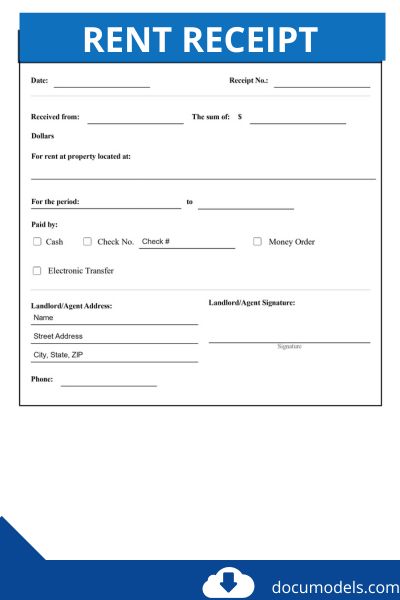
This simple yet powerful document not only serves as proof of payment but also helps maintain clear financial records, fostering trust and transparency in the landlord-tenant relationship.
Rent Receipt WordRent receipt example
What Is a Rent Receipt?
A rent receipt is a document provided by a landlord or property manager to a tenant as proof of payment for rent. It serves as an acknowledgment that the tenant has paid the agreed-upon rent amount for a specific period, either partially or in full.
While many people associate rent receipts with paper slips, they can also be issued electronically via email or rental management platforms.
Common Uses
Rent receipts aren’t just paperwork—they have practical applications for both tenants and landlords.
Here’s a breakdown of their most common uses:
- Proof of Payment for Tenants: Tenants can use rent receipts to verify they’ve paid rent on time, which is crucial during move-out inspections, security deposit returns, or if a landlord claims non-payment. This is especially helpful in avoiding late fees or eviction proceedings.
- Tax Deductions and Reporting: tenants who work from home or qualify for certain tax credits (like the Earned Income Tax Credit or state-specific renter’s credits) may need receipts to claim deductions. Landlords use them to report rental income on their taxes, ensuring compliance with IRS requirements.
- Government Assistance Programs: For tenants receiving housing subsidies (e.g., Section 8 vouchers from HUD), rent receipts provide necessary documentation to prove payments and maintain eligibility.
- Dispute Resolution: In case of disagreements over payments, receipts act as evidence in small claims court or mediation, protecting both parties.
- Record-Keeping for Landlords: They help landlords maintain accurate financial records, track payment histories, and identify patterns like chronic late payers.
- Building Credit or Rental History: Some credit reporting agencies or future landlords may accept rent receipts as proof of reliable payment history, which can help tenants build credit without traditional loans.
Key Elements of a Rent Receipt
A well-crafted rent receipt should include specific details to make it valid and useful. Omitting key information could render it ineffective for legal or tax purposes.
Below is a table outlining the essential elements, along with explanations:
| Element | Description | Why It’s Important |
| Receipt Number | A unique identifier (e.g., RR-001) for tracking purposes. | Helps with organization and quick reference in records. |
| Date of Payment | The exact date the payment was received (e.g., August 9, 2025). | Establishes timeliness and aligns with lease terms. |
| Tenant’s Name | Full name of the person(s) paying rent. | Identifies who made the payment, especially in multi-tenant households. |
| Landlord’s Name | Full name or business name of the property owner/manager. | Clarifies the recipient and adds legitimacy. |
| Property Address | Full address of the rented unit (e.g., 123 Main St, Apt 4B, Anytown, USA). | Links the receipt to the specific rental property. |
| Rental Period | The time frame covered (e.g., August 1-31, 2025). | Specifies what the payment applies to, preventing confusion over partial payments. |
| Payment Amount | The total amount paid (e.g., $1,200.00). | Core proof of the transaction; include breakdowns if fees are involved. |
| Payment Method | How the rent was paid (e.g., cash, check #1234, Venmo, bank transfer). | Provides traceability, especially for non-cash methods. |
| Balance Due (if any) | Any remaining amount owed after this payment. | Useful for partial payments or outstanding balances. |
| Signature | Handwritten or digital signature of the landlord/manager. | Authenticates the document and adds legal validity. |
How to Fill Out a Rent Receipt
Filling out a rent receipt is straightforward, but accuracy is key to avoid errors. Follow this step-by-step guide, assuming you’re using a blank template.
- Gather Necessary Information: Before starting, collect details like the tenant’s name, payment details, and lease terms. Verify the amount against the lease agreement.
- Enter the Receipt Number and Date: Assign a sequential number (e.g., start from 001 and increment). Write the current date of receipt—not the due date.
- Add Names and Address: Input the tenant’s full name, your name as landlord, and the property’s address. Double-check for spelling errors.
- Specify the Rental Period and Amount: Clearly state the period (e.g., “Rent for September 2025”) and the exact amount paid. If it’s partial, note the balance due.
- Note the Payment Method: Describe how payment was made. For cash, this is critical; for checks, include the check number.
- Include Any Additional Notes: Mention if the payment includes utilities, late fees, or other charges. Break it down if needed (e.g., Rent: $1,000; Utilities: $200).
- Sign and Provide Copies: Sign the receipt. Give the original to the tenant and keep a copy for your records. Digital versions can be emailed with an e-signature.
Legal and Practical Considerations
Legal Aspects
In the US, rent receipt requirements vary by state and local laws—there’s no federal mandate, but many jurisdictions require them for certain payments.
For example:
- Cash Payments: States like California (Civil Code § 1499) and New York require landlords to provide receipts for cash rent to prevent disputes.
- Other States: In Texas or Florida, it’s not always mandatory but highly recommended for record-keeping.
- Tax Implications: The IRS doesn’t require receipts for every payment, but they help substantiate income/expenses during audits. Tenants may need them for state renter’s rebates (e.g., in Minnesota or Vermont).
Practical Tips
- Storage: Keep receipts for at least 3-7 years (per IRS guidelines for tax records). Digital storage in the cloud is secure and accessible.
- Customization: Tailor receipts to your lease—include clauses for pet fees or parking if applicable.
- Common Mistakes to Avoid: Don’t backdate receipts, forget signatures, or use vague language. Always issue promptly after payment.
Related Articles: