
Keeping track of rental payments, late fees, and outstanding balances can quickly become overwhelming for landlords and property managers — especially when managing multiple tenants. That’s where a rent ledger comes in.
A rent ledger is a simple yet powerful tool that records all financial transactions between a landlord and tenant over the course of a lease. It provides a clear, organized view of payment history, helping landlords stay on top of their cash flow while offering tenants full transparency about what they owe and what they’ve paid.
Beyond just tracking payments, a rent ledger can also be essential for resolving disputes, preparing tax documents, and maintaining professional records.
In this post, we’ll break down exactly what a rent ledger is, why it’s important, and share practical rent ledger templates you can start using today.
Rent Ledger Templates and Formats

By implementing a rent ledger, you can ensure smoother communication, track transactions, and avoid conflicts altogether.
Free rent ledger WordRent ledger example
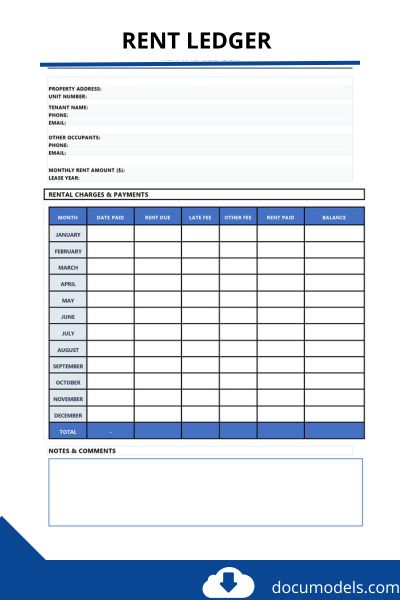
Free rent ledger Template 2
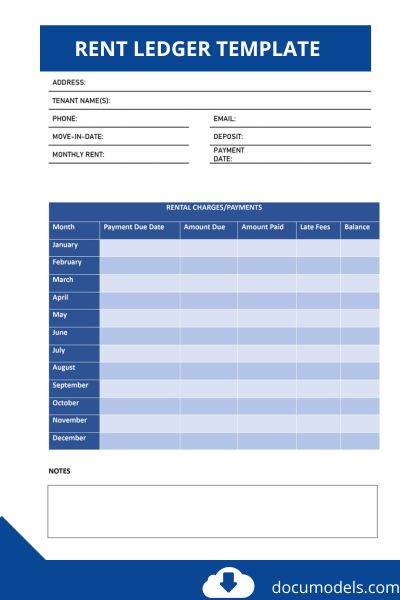
What Is a Rent Ledger?
A rent ledger is a document or system used to record and track rental payments and related information. Think of it as a financial history book, specifically for rental properties. It acts as a centralized record that details who has paid rent, when they paid it, and how much was paid. Both tenants and landlords benefit from its transparency and simplicity.
Typically, a rent ledger is updated monthly and offers a clear history of rental transactions over time. It can be maintained digitally using property management software, spreadsheets, or in physical ledgers, depending on individual preferences.
Purpose of a Rent Ledger
The purpose of a rent ledger is twofold:
- For landlords: It ensures accurate financial tracking, enabling them to monitor income streams and enforce timely payments.
- For tenants: It serves as a documented proof of payment, ensuring accountability and protecting against any misunderstandings.
Core Information Recorded in a Rent Ledger
. Below is a breakdown of the core elements typically included. These can vary slightly based on your needs, but they form the foundation of any effective ledger.
Standard Columns in a Rent Ledger
To visualize this, here’s a sample table showing what a basic rent ledger might look like for a single tenant over a few months:
| Date | Description | Amount Due | Amount Paid | Payment Method | Balance | Notes |
| 01/01/2025 | January Rent | $1,200 | $1,200 | Bank Transfer | $0 | Paid on time |
| 01/15/2025 | Late Fee (for December) | $50 | $0 | N/A | $50 | Tenant notified |
| 02/01/2025 | February Rent | $1,200 | $1,000 | Check | $250 | Partial payment; follow up |
| 02/10/2025 | Partial Payment Adjustment | N/A | $250 | Cash | $0 | Balance cleared |
Explanation of Core Fields:
- Date: The date of the transaction, such as when rent is due or when a payment is received. This helps track timelines and identify late payments.
- Description: A brief note on what the entry is for, e.g., “Monthly Rent,” “Security Deposit Refund,” “Late Fee,” or “Maintenance Charge.”
- Amount Due: The expected amount for that period, based on the lease agreement. This could include base rent plus any utilities or additional fees.
- Amount Paid: The actual amount received from the tenant. If it’s less than due, it highlights arrears.
- Payment Method: How the payment was made, such as cash, check, bank transfer, or online platforms like Zelle or PayPal. This is useful for reconciliation and tax purposes.
- Balance: The running total of what’s owed. Starts at zero and adjusts with each entry (positive for owed amounts, zero or negative for overpayments).
- Notes: Any additional comments, like reasons for delays, disputes, or confirmations. This field is crucial for documentation in case of legal issues.
Benefits of Using a Rent Ledger
Implementing a rent ledger isn’t just about compliance—it’s a smart practice that saves time, reduces errors, and builds trust.
Here are the key advantages, especially for those new to property management:
- Financial Accuracy and Transparency: It minimizes disputes by providing a clear, shared record of payments. Tenants can request a copy to verify their history, and landlords can use it to prove compliance with lease terms.
- Easy Tracking of Overdue Payments: Spot late payers at a glance with running balances. This allows for timely reminders and helps maintain cash flow.
- Tax and Legal Compliance: Come tax season, a ledger simplifies deductions for expenses and income reporting. It’s also invaluable in eviction proceedings or small claims court as evidence of payment history.
- Improved Organization for Multiple Properties: If you manage several units, a digital ledger can aggregate data, generate reports, and even automate invoicing.
- Cost Savings: Free tools like spreadsheets eliminate the need for expensive software initially. As you scale, it integrates seamlessly with advanced systems.
- Peace of Mind for Tenants and Landlords: Tenants appreciate knowing their payments are logged accurately, which can lead to better relationships and longer tenancies.
Applying the Rent Ledger: Practical Use Cases
Now that we’ve covered the basics, let’s explore real-world scenarios where a rent ledger shines.
These examples illustrate how to apply it effectively, with tips for beginners.
Use Case 1: Monthly Rent Tracking for a Single-Family Home
As a new landlord renting out your first property:
- Set up a simple spreadsheet at the start of the lease.
- Enter the monthly due amount (e.g., $1,500) on the 1st of each month.
- Log payments as they come in, noting any discrepancies.
- Tip: Use color-coding (green for on-time, red for late) to visually flag issues.
Use Case 2: Handling Late Payments and Fees in an Apartment Complex
For property managers with multiple tenants:
- When a payment is missed, add a “Late Fee” entry (e.g., $25 after 5 days).
- Update the balance and send a ledger excerpt to the tenant as a reminder.
- Practical Example: If rent is due on the 1st and paid on the 10th, the ledger shows the fee accrual, helping enforce policies fairly.
Use Case 3: Year-End Reporting and Tax Preparation
At the end of the year:
- Summarize totals using spreadsheet formulas (e.g., SUM for total income).
- Generate a report showing paid vs. due amounts for IRS Schedule E.
- Benefit for Beginners: This avoids last-minute scrambling and ensures you claim all eligible deductions, like repairs deducted from rent.
Use Case 4: Dispute Resolution with Tenants
If a tenant claims they’ve overpaid:
- Refer to the ledger’s chronological entries to verify.
- Provide a printed or digital copy as proof.
- Scenario: A tenant disputes a security deposit deduction; the ledger’s notes on damages provide context and evidence.
Related Articles: